
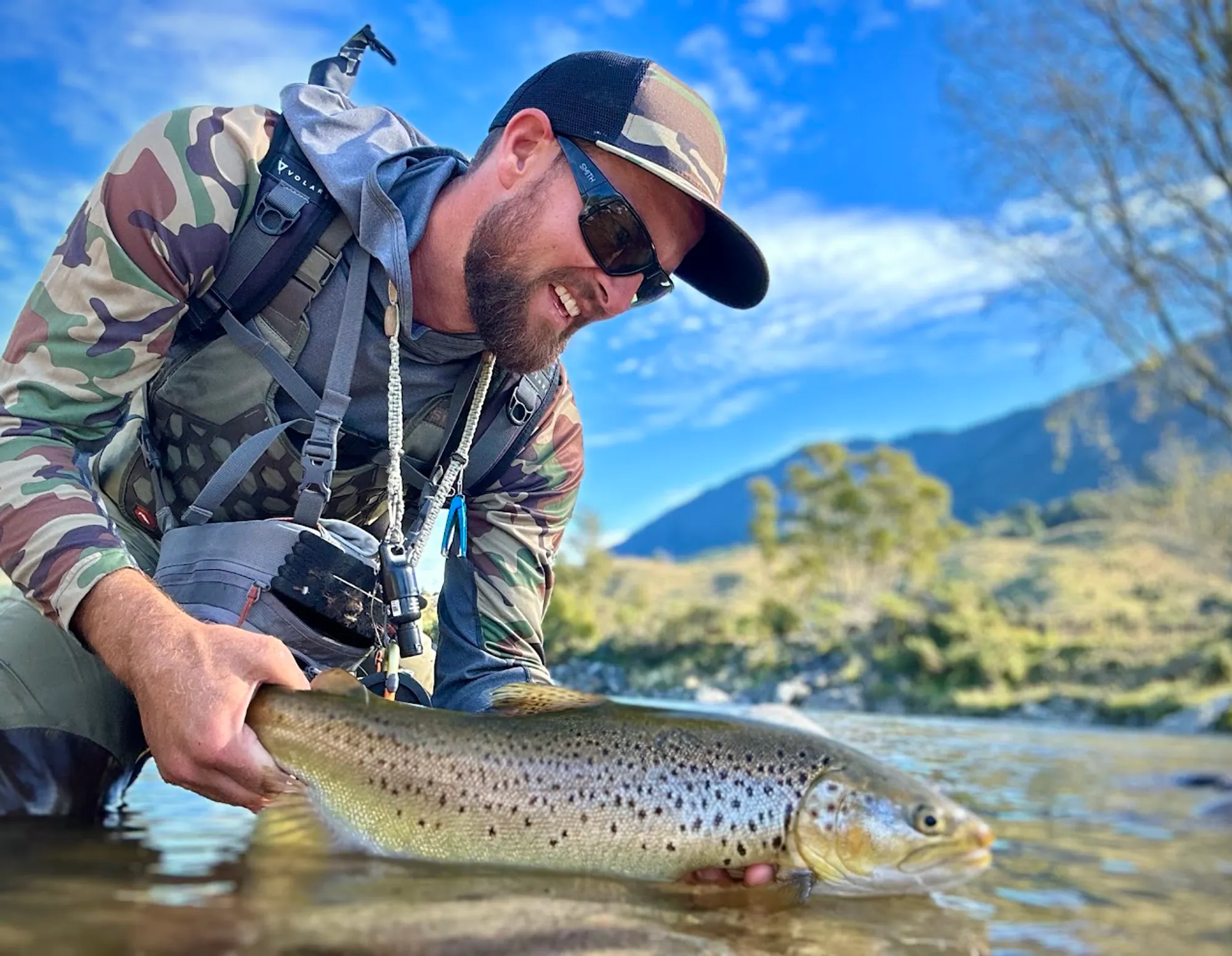
The Motueka area is one of New Zealand’s great fly fishing bases. Within easy reach of town you’ll find clear freestone rivers, boulder runs, willow lined pools, spring creeks, backcountry tributaries and some of the most rewarding sight-fishing for brown trout in the top of the South Island.
For visiting anglers, the appeal is simple: Motueka gives you serious trout water without needing to disappear for days. For locals, it is a fishery that rewards patience, observation and respect. These are not always easy trout, but they are beautiful fish in beautiful water — and that is exactly the point.
The Motueka River
The Motueka River, often simply called “the Mot”, is the main event. It rises in the mountains and flows north through the Tasman region before reaching the sea at Motueka. Along the way it changes character often: braided runs, deep glides, pocket water, riffles, willow edges, long pools and boulder gardens. The river is best known for brown trout. These fish are often visible in clear water, but they can be selective and easily spooked.
A successful day on the Motueka is rarely about flogging the water. It is about walking quietly, spotting carefully, choosing one good fish at a time and making the first cast count. The main river suits a wide range of anglers. Beginners can enjoy easier access reaches and learn to read water, while experienced anglers can work upstream, sight-fish to individual trout and test their presentation skills.
What Makes the Motueka Special
The Motueka is not just a convenient local river; it has real character. It is clear, varied and accessible, with enough fish to keep you interested and enough technical water to keep you honest. The best days often come when you slow down. Look before you cast. Watch the bubble line. Scan the edges. Study the tail-outs. On bright days, brown trout may sit in surprisingly shallow water, especially near structure, drop-offs or broken current. In lower light, they may move into riffles and edges to feed more confidently. The river can fish very differently from week to week. Freshes can move fish, reshape runs and change the mood of the river. Long dry spells can make trout wary and presentation-critical. That variability is part of the Motueka’s charm.
Key Areas to Explore
Lower Motueka
The lower river offers easier access, broader water and a mix of pools, riffles and runs. This is a good place for newer anglers, winter options where permitted, and days when you want a less technical outing. The lower reaches can also suit spin and bait anglers where regulations allow, so fly fishers should expect to share the water. For fly anglers, the lower river can be good with nymphs, small streamers and dry-dropper rigs. Focus on seams, drop-offs, willow edges and any defined current line.
Middle Motueka
The middle river is classic fly water. This is where many anglers will find the best balance of access, trout numbers and interesting structure. Expect clear runs, riffles, pools, gravel beaches and boulder water. This section rewards careful walking and good presentation.
A 5-weight rod, long leader and a box of sensible dry flies and nymphs will cover most situations. When the river is low and clear, use lighter tippet and smaller flies. When there is a little colour or extra flow, heavier nymphs and slightly stronger tippet can be useful.
Upper Motueka and Tributaries
The upper river and tributaries offer more intimate fishing. The water is smaller, clearer and often more technical. Fish may be fewer, but the experience can be exceptional. This is not always beginner water. You need accurate casting, careful wading and a quiet approach. Short casts, bow-and-arrow casts and side arm presentations can all be useful under trees or around tight banks. Treat these smaller waters with respect. Move slowly, avoid walking through likely lies, and give other anglers plenty of space.
Nearby Rivers and Options
The Wangapeka The Wangapeka is one of the standout tributary systems in the wider area. It offers beautiful water, strong scenery and the chance of excellent brown trout fishing. Depending on conditions, it can provide everything from riffle fishing to technical sight-fishing. Access, river height and weather matter here. After rain, the river can rise and colour. In settled weather, it can be superb.
The Baton
The Baton is smaller, more intimate and very rewarding for anglers who enjoy stalking trout. This is careful fishing: light feet, long leaders, accurate casts and minimal false casting. It is a good choice when you want a quieter day away from the main river, but it should be approached with patience rather than expectations of easy numbers.
The Pearse and Graham
These smaller tributary waters can provide excellent local-style fishing for anglers who enjoy exploring. They are often best treated as technical small-stream fisheries. The fish may be spooky, the casting may be awkward and the rewards can be memorable.
Lakes and Stillwater Options
While the Motueka area is mainly known for river fishing, local stillwaters and nearby lakes can offer variety, especially when rivers are high or coloured. In stillwater, think differently: wind lanes, weed edges, cruising fish and slow retrieves rather than upstream nymphing. Best Time of Year Spring Spring can be excellent, especially as fish regain condition and insect activity increases. Rivers may still be affected by rain and snowmelt, so conditions can change quickly. Nymphing is often reliable, with dry dropper fishing becoming more useful as temperatures rise. Summer Summer is classic Motueka fly fishing: clear water, sight-fishing, cicadas, terrestrials, evening rises and long days. This is also when fish can become wary due to low flows, bright sun and angling pressure. Start early, fish the shade, use longer leaders and avoid heavy wading. On hot days, consider giving trout a rest in the warmest part of the afternoon and returning for the evening rise. Autumn Autumn may be the most beautiful time to fish the Motueka area. Cooler nights, softer light and active fish can make for excellent days. Terrestrials may still work early in autumn, while nymphs and mayfly patterns become more important as conditions cool. Be aware of season closing dates and spawning protections. Always check the current regulations before heading out. Winter options are more limited and depend on the specific water and current rules. Where fishing is open, the lower river can provide opportunities, especially with nymphs or small streamers. Fish slowly, choose warmer parts of the day and do not expect the pace of summer fishing.
Recommended Fly Rods and Gear
For most Motueka-area trout fishing, a 9-foot 5-weight is the ideal all round rod. It gives enough delicacy for dry fly work and enough control for nymphs, wind and larger fish. A 4-weight can be lovely on smaller tributaries and calm days. A 6-weight is useful when throwing heavier nymph rigs, streamers or larger terrestrial patterns in wind. A good local setup would include: 9-foot 5-weight fly rod Floating weight-forward line 9–12 ft tapered leaders 4X, 5X and 6X tippet Polarised sunglasses Wading staff for bigger water Rubber-soled wading boots Lightweight waterproof jacket Small net Fly floatant and split shot Nippers, forceps and indicator yarn or small dry-dropper indicators Polarised glasses are not optional here. They are one of the most important pieces of fishing gear you can own. The difference between seeing nothing and seeing a feeding brown trout can be one good pair of lenses. Fly Selection You do not need hundreds of patterns, but you do need sensible coverage.
Dry Flies
Useful dry flies include: Parachute Adams Dad’s Favourite-style mayfly patterns Royal Wulff or Royal Coachman-style attractors Elk Hair Caddis Small black gnats Cicada patterns in summer Blowfly and beetle patterns Stimulators Small foam terrestrials In summer, terrestrial fishing can be superb. Cicadas, beetles and blowflies all have their moments. But do not assume big flies always work. Pressured fish may ignore a large cicada and happily take a small, well-presented dry.
Nymphs
Useful nymphs include: Hare and Copper Pheasant Tail Copper John Prince Nymph Caddis nymphs Stonefly nymphs Mayfly nymphs Perdigon-style nymphs Small tungsten bead nymphs Carry a range of weights. Depth is often more important than pattern. A perfect fly drifting above the fish is useless; a simple nymph drifting naturally at the right depth is deadly.
Small streamers can be useful after freshes, in deeper pools or when fish are aggressive. Woolly Buggers, small bully patterns and simple dark streamers are all worth carrying. Tactics That Work Sight-Fishing The Motueka area is made for sight-fishing. Walk slowly, stay low and look into the water before casting. Search for shapes, shadows and movement rather than obvious fish. Often you will see the white of a mouth opening before you fully register the trout. Once you spot a fish, take your time. Watch its feeding rhythm. Work out the current. Choose a casting position. One good cast is better than ten rushed ones. Dry-Dropper Fishing A dry-dropper rig is one of the most useful systems in the Motueka area. Use a buoyant dry fly with a small nymph suspended below it. This lets you cover riffles, seams and pocket water efficiently while still giving trout a chance to eat on top. Adjust the dropper length to the depth. In shallow riffles, short is fine. In deeper runs, lengthen the dropper or switch to a dedicated nymph rig. Upstream Nymphing For deeper runs, upstream nymphing is reliable. Cast upstream or up-and across, mend early and keep contact without dragging the flies. Watch the indicator, leader tip or dry fly closely. Many takes are subtle.
Evening Rise
On warm evenings, the river can come alive. Caddis, mayflies and small surface insects can bring fish into feeding lanes. This is when simple dry fly fishing can be at its best. Arrive before the rise starts. Choose a pool or glide, sit quietly and watch. The best fish often reveal themselves late.
Wading and Safety
The Motueka looks inviting, but it deserves respect. Flows can be powerful, rocks are slippery and crossings can become dangerous after rain. Do not cross where you cannot see the bottom clearly, and never assume a familiar crossing is safe after a fresh. Use a wading staff in bigger water, wear proper boots and take your time. Avoid pushing into deep, fast current just to reach the other bank. There is almost always another piece of fishable water. Tell someone where you are going, especially if fishing alone or heading into tributary valleys. Carry a phone, warm layer, rain jacket, water and a small first aid kit. Access and Etiquette Much of the Motueka catchment has good access, but anglers must respect private land, farm gates, stock and other river users. Use formed access points where available, leave gates as you find them and do not block tracks or driveways. On the river, give other anglers space. If someone is working upstream, do not jump in just above them. A good rule is to move far enough that neither angler feels crowded. Handle trout carefully. Wet your hands before touching fish, keep them in the water where possible and release them quickly. Big brown trout are precious, and the quality of the fishery depends on how anglers treat it. Biosecurity: Check, Clean, Dry Every angler has a responsibility to protect local waterways.
Before moving between rivers, check, clean and dry all gear that has touched the water. That includes boots, waders, nets, fly lines, packs, boats and anything damp. Freshwater pests can spread in tiny amounts of water or mud. Good biosecurity is not just a rule; it is part of being a decent angler in New Zealand. A Simple One-Day Plan For a first day in the Motueka area, start on an accessible middle-river section. Walk slowly, look carefully and fish a dry-dropper through riffles and seams. If the sun is high, concentrate on deeper runs, shaded banks and broken water. In the evening, find a calm glide and wait for rising fish. Do not try to cover too much river. A few hundred metres fished well will teach you more than several kilometres walked in a hurry. What to Buy Before You Go A useful Motueka fly fishing kit should include: Quality polarised sunglasses 5-weight rod and floating line 4X, 5X and 6X tippet Small selection of dries, nymphs and terrestrials, Floatant and nymph weight. Rubber-soled wading boots, Lightweight rain shell, Sun hat or cap, Insect repellent. Landing net. Current Fish & Game licence.
Local advice is valuable. River levels, fly choice and access conditions change constantly, so call into a local outdoor or fishing store before heading out. A five-minute conversation can save a wasted day. Final Word Fly fishing around Motueka is not about easy numbers or guaranteed trophies. It is about clear water, careful approaches, wild brown trout and the satisfaction of getting things right. Some days the river will humble you. Other days, one perfectly placed cast to a feeding fish will stay with you for years. That is the Motueka. Patient, technical, beautiful and deeply rewarding
Robby Cribbs, Fly Fishing Guide (Tasman region)